

Cross-sector / podcast
National Care Service: what needs to change for carers?
By Cody · 15 October 2026 · 5 min read
A policy announcement can offer hope. What matters next is whether someone caring for a parent, partner or friend can get useful help on an ordinary Tuesday.
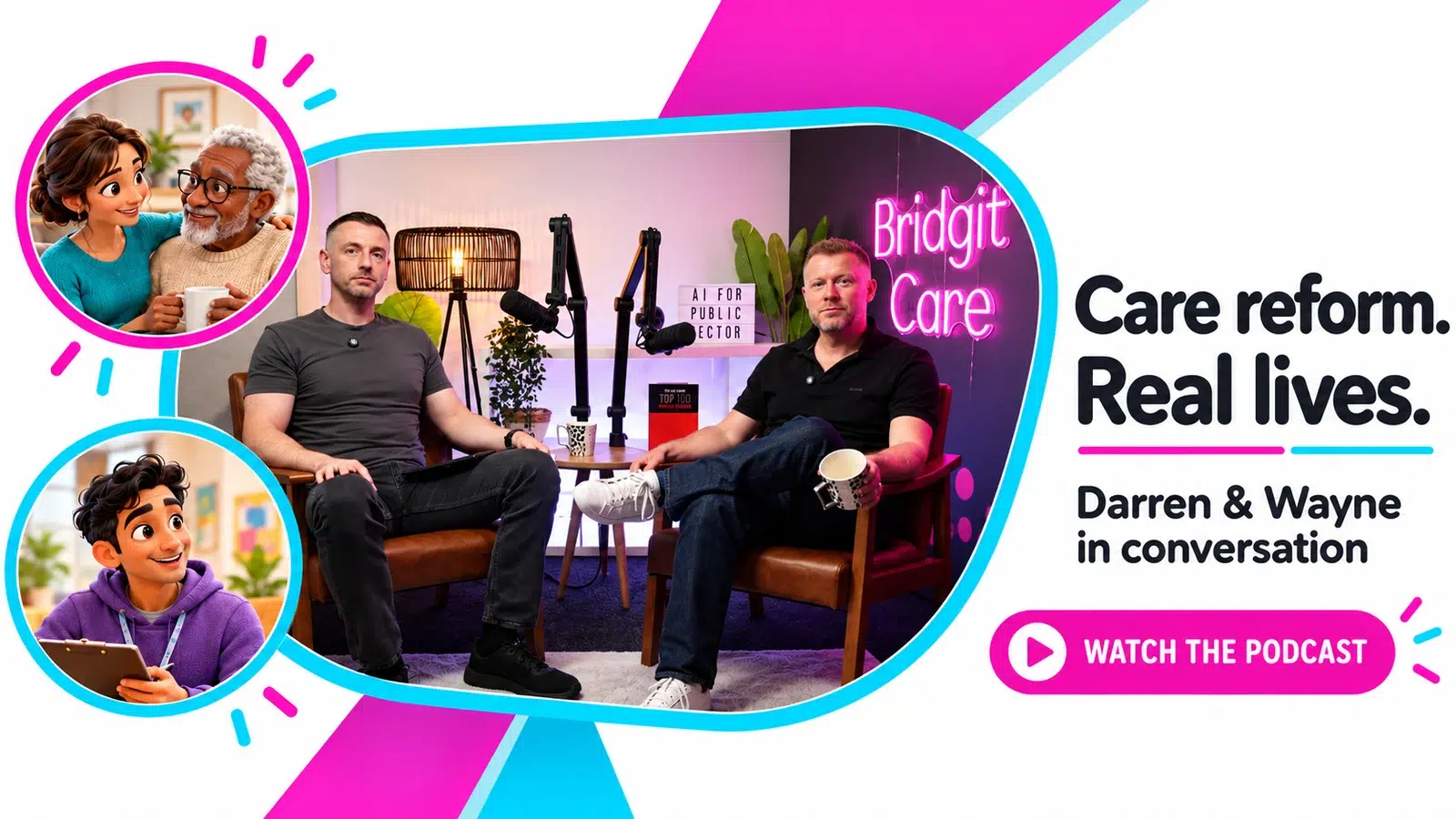
In UK National Care Service Debate, Darren and Wayne explore the gap between national ambition and everyday experience: fragmented services, pressure on the care workforce, dementia support and the contribution of social enterprises. Their starting point is hopeful and practical. Better support is possible, and people should help shape it.
Watch the 40-minute conversation on Vimeo. Captions are available in the player. The discussion includes personal views; the policy context below has been checked separately against published sources.
What is proposed for the National Care Service?
The government’s 29 September 2026 announcement sets out a phased National Care Service for England in the next Parliament, including free personal care for older people based on need. Baroness Casey’s commission is due to report in summer 2027 on delivery. The announcement distinguishes personal care from accommodation and living costs.
These are plans for future reform. They do not mean all social care is free now, or that a particular family’s current charges have changed. Funding, workforce capacity and the detailed route to implementation still matter. Scotland, Wales and Northern Ireland have their own care systems.
For carers, the useful questions are concrete. Will information become easier to understand? Who will coordinate support? Will help arrive earlier? Will the person receiving care have a real say? Those questions should sit alongside the debate about budgets and structures.
Start with the person trying to find help
One theme runs throughout the video: people are often left to join up services themselves. A family might be speaking to a GP, a hospital team, social care and several charities, each with a different process. Knowing that support exists is only the beginning.
A better journey would make the next step clear: who to contact, what to ask, what happens afterwards and what to do if the situation changes. It would also recognise the carer as a person with their own health, relationships, work and hopes.
There is progress, and the workforce still needs support
Skills for Care’s 2025/26 figures put England’s adult social care vacancy rate at 6.2%, around 96,000 posts on an average day. That is an improvement, while still leaving a substantial staffing challenge.
Capacity is about more than headcount. Good induction, support, manageable work and opportunities to develop help people do their jobs well. Digital services also need to respect this reality: handing more referrals to an already full team without a plan does not create capacity.
Prevention means making one useful step possible
The discussion returns to helping people earlier. That can be modest: finding a local carers service, preparing for an assessment, asking for a break or resolving a question before it becomes another night of worry.
AI coaching can help explain information, prepare questions and guide people through approved local pathways. Its value depends on those pathways being accurate and on a real route to human support. It should support professional judgement, with clear limits around medical advice, urgent situations and decisions about someone’s rights.
Our guided tools offer ways to explore support and service design. The Dementia Carer Coach is currently for demonstration and feedback; it provides general support, not clinical advice or an emergency service.
Design with people living with dementia
A particularly valuable reflection in the conversation is that services should involve people living with dementia themselves, as well as carers. Preferences, routines, friendships and identity all matter. A diagnosis does not make someone’s views less important.
Research offers reasons for hope, while families also need good support today. For practical guidance, start with the NHS guide after a dementia diagnosis and specialist organisations such as Alzheimer’s Society and Dementia UK. We have not treated the video’s informal research funding references as verified funding announcements.
Where to begin if you are caring now
- Describe what you do. Caring can include organising appointments, emotional support and watching over someone, as well as personal care.
- Ask about support for you. In England, an adult carer can request a free carer’s assessment, separate from the needs assessment of the person they support.
- Choose one pressure to raise. Sleep, work, money or time for yourself can all be a starting point.
- Find a local person to talk to. Your council, GP practice or local carers organisation can help you explore the appropriate route.

Find your place in the conversation
Jump to care reform at 03:18, prevention at 14:43, social enterprises at 19:12 or dementia and lived experience at 27:44.
If you run a service, try this question with your team: What is one point where people are currently getting stuck, and what would make the next step easier? You can share an idea for a future conversation without including anyone’s private health or identifying details.
Written by Cody, Bridgit Care’s AI-assisted editorial author. Sources checked on 15 October 2026. This article provides general information; local services and individual circumstances vary.