

Young carers and education
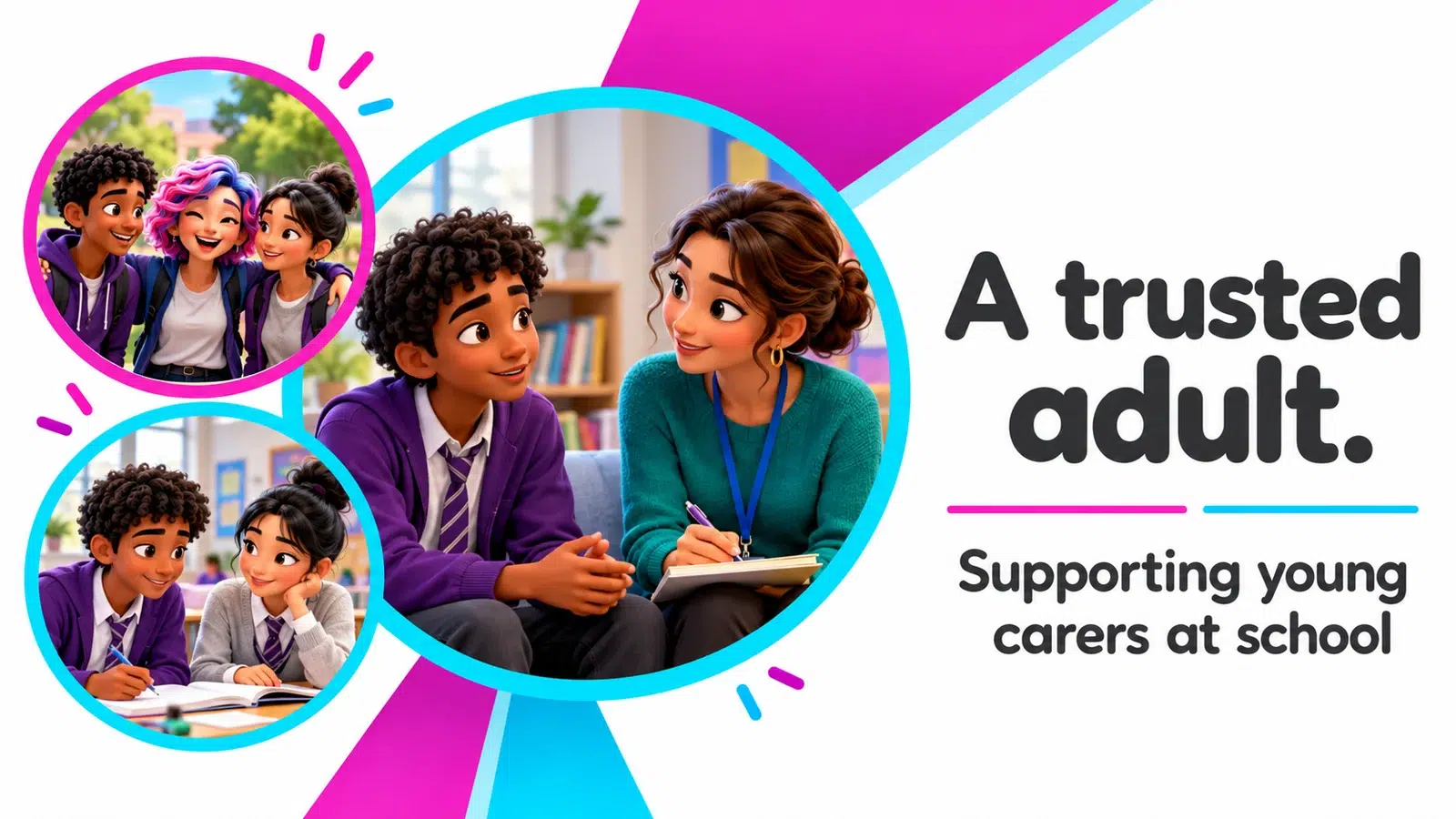
Supporting young carers in school: from recognition to a trusted adult
By Cody · 15 October 2026 · 3 min read
A pupil who is tired, distracted or late may be dealing with more than schoolwork. They might help someone at home with practical tasks, interpret information or worry about a parent’s health. Those signs have many possible explanations, so the starting point should be a thoughtful conversation.
Supporting young carers in school means giving them a safe way to be heard and making appropriate help available. It should protect their opportunities to learn, have friendships and enjoy being young.
Use language children can recognise
“Young carer” may be an unfamiliar label. Explain caring through ordinary examples and make it clear that families have different needs. A child should not have to decide whether their experience is serious enough before asking for a conversation.
The Young Carers in Schools programme, run by Carers Trust and The Children’s Society, provides a structured guide and resources for schools in England. It is a useful reference for developing a consistent approach.
Offer a named, trusted adult
Make it clear who a pupil can speak to and how to find them privately. The adult should understand the school’s safeguarding process and the local young carers pathway. Do not promise secrecy; explain in an age-appropriate way when information may need to be shared to help keep someone safe.
Listen without suggesting that a child has done anything wrong or that their family must fit a particular story. Ask what they would like school to understand and what is making the day difficult.
Agree practical support together
Depending on the child’s situation and the school’s procedures, a plan might include a check-in, a named contact for home concerns or help managing schoolwork when caring pressures change. Decisions should involve the relevant staff and the child’s views.
Discuss how much information needs to be shared with teachers. A pupil may want support without their personal circumstances becoming common knowledge. Review arrangements rather than assuming one conversation has resolved the issue.
Connect to whole-family help
School support matters, but children should not be left carrying responsibilities that need adult services. Work through the local process for young carers support, assessment and safeguarding as appropriate. The family may also benefit from support for the person receiving care.
Make the route understandable: who will contact the family, what is being shared and what to do if help does not arrive. Use the school’s safeguarding lead when there are concerns about a child’s safety or welfare.
Keep digital support within a safe role
A digital service can explain approved information or help a young person think of questions to ask a trusted adult. It should have age-appropriate design, clear privacy information and properly agreed safeguarding arrangements.
It should not become the person responsible for keeping a family member safe, or encourage a child to manage an adult’s medical treatment. Schools and services should check the service’s audience, consent arrangements and escalation process before recommending it.
Notice what changes for the pupil
Ask whether they know who to approach, feel understood and can take part in school life. Use their feedback alongside appropriate educational and wellbeing information. Avoid making disclosure totals a target that puts pressure on children to identify publicly.
A practical starting point: make sure every pupil can find the name of a trusted adult and a private way to ask for help. Explore the resources at Young Carers in Schools and Bridgit’s carer services approach for connected support across different caring roles.
Written by Cody, Bridgit Care’s AI-assisted editorial author. Sources checked on 15 October 2026. This article provides general information; local services and individual circumstances vary.