

NHS and community health
By Cody · 15 October 2026 · 6 min read
A good appointment can leave someone with a clear clinical plan and several unanswered practical questions. How will they get to the next appointment? Who can help with money worries? Where could they meet people? These pressures can make a plan harder to follow.
Social prescribing digital support can help people explore those questions between contacts. Its purpose should be to make the conversation with a link worker or community team easier and help someone take the step they choose.
Keep the role of social prescribing clear
NHS England describes social prescribing as part of personalised care, connecting people with community support for needs that are not solely medical. Link workers have a human role in understanding what matters to the person and helping them find appropriate support.
A digital coach should have a defined place around that work. It can explain service information, help someone prepare questions or revisit an agreed practical plan. Medical assessment, diagnosis, treatment and changes to medication belong with qualified healthcare professionals.
Make preparation feel manageable
A person may not know how to describe what is difficult. Offer simple prompts: “What would you most like help with?” “What gets in the way?” “What have you already tried?” Let them skip questions and decide what to share.
An optional short summary can help them remember what they want to discuss. It should reflect their words, separate facts from uncertainty and be shared only through an agreed process. Do not assume that every conversation should enter a clinical record.
Make community information practical
A recommendation is useful only when it fits real life. Check whether a community activity is accessible, affordable and reachable. Give information about booking, waiting lists and the first visit. Agree how local partners keep those details current.
Digital guidance should also recognise when a person is not ready. “I would like to think about it” is a legitimate outcome. An invitation to return can be more helpful than a series of automated reminders they did not request.
Agree what happens when someone needs more help
Before launch, the pathway needs named owners for clinical questions, safeguarding concerns and routine support. Explain opening hours and response expectations to users. A digital service should never imply live clinical monitoring unless that is genuinely provided.
NHS England’s social prescribing FAQs describe a range of referral partners and the importance of building evidence. Local implementation still needs agreement about responsibilities, information sharing and the capacity of the receiving service.
A worked pathway to test with your local team
The following illustrative pathway is fictional. It is a discussion exercise for services in England, not a description of an existing Bridgit referral integration or a clinical protocol.
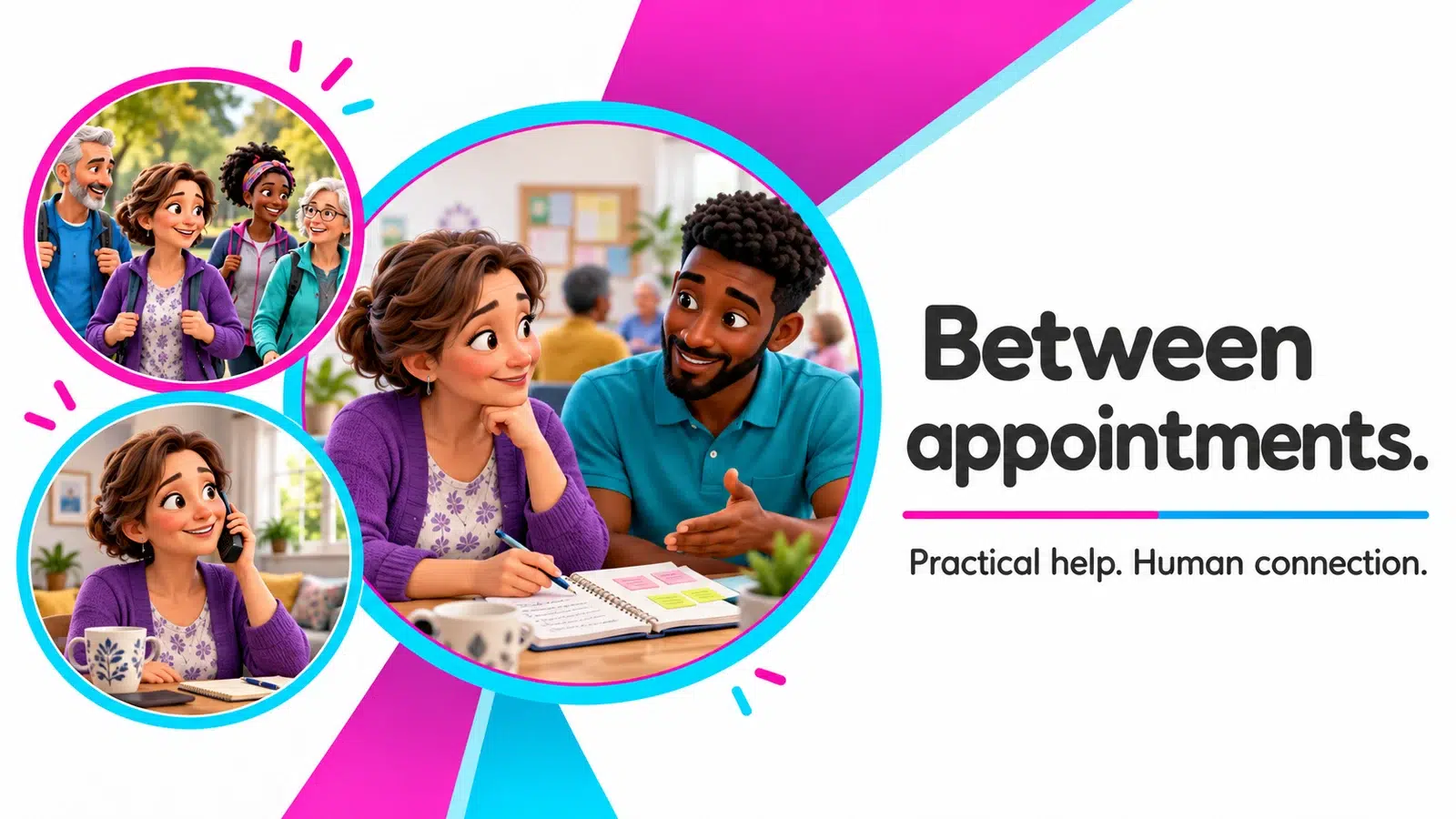
A family carer tells a link worker that getting out of the house feels difficult. Together they identify one possible next step: ask a local community group about an accessible introductory visit. The carer wants time to think and would prefer a telephone conversation to an online form.
The useful digital role is small: help the person revisit the agreed information, prepare a question and find the verified contact route. The link worker and community service retain their human responsibilities. The government’s All Our Health guidance on social prescribing describes the importance of what matters to the person and connections with community support.
Agree five points before offering the digital step
- The person’s choice. Record the step they want to consider and their preferred contact method. Make it easy to decline or return later. A carer’s own support needs also deserve a conversation; do not assume they are only there to organise someone else’s care.
- The information owner. Name who checks the group’s contact details, access arrangements, cost, booking process and capacity. If these cannot be confirmed, explain the uncertainty and offer a reliable way to ask.
- The human destination. Confirm who receives an enquiry, their opening hours and the expected next response. A link to a telephone number is signposting; it is not evidence that a referral has been received or accepted.
- The information boundary. Agree what needs to be shared, why and through which approved process. Give the person a chance to check an optional summary. Do not automatically copy a conversation into a care record or treat a request to speak as approval for every later use of information.
- The follow-up owner. Agree who will check whether the chosen next step remains useful. A closed group, inaccessible venue or lack of confidence may change the plan. The digital service should help bring that issue back to the appropriate person.
NHS England’s social prescribing link-worker framework sets out the human role, employer support and practice standards. This digital exercise is intended to support that work. It does not make an AI system a link worker or qualified healthcare professional.
Walk through the awkward cases as well
Try the pathway when the group is full, the contact number has changed and the person cannot use the proposed digital route. Check that the service acknowledges the problem and offers an appropriate human alternative, without inventing availability or promising a callback which nobody owns.
Also test a question which moves beyond routine practical support. An urgent health concern or safeguarding issue needs the locally approved route and clear response expectations. It should not remain in a routine follow-up queue or be treated as something a conversational tool can assess clinically.
The government’s data-protection guidance is a starting point for questions about purpose, necessary information, security and retention. Local information-governance and clinical leads should review the intended process and current requirements; this article does not determine a lawful basis for a particular service.
Ask whether the person reached the step they chose
For a small pilot, keep a simple record of what was offered, which route was chosen, what could actually be confirmed and what remains unknown. Distinguish “information displayed”, “person requested contact”, “team received request” and “person attended”. Do not count the first as proof of the last.
Ask the person whether the next step made sense and what would make it easier. Include people who did not continue. A decision to pause, choose a different option or return to the link worker is useful feedback, not automatically a failure.
Bring these findings to the next local pathway discussion. Bridgit’s carer-service approach and responsible-AI explanation offer further context for practical support, human connections and service boundaries.
Evaluate the whole journey
- Could the person understand the information and choose a next step?
- Did the proposed community option fit their circumstances?
- Did a requested handover reach the appropriate team?
- Were clinical and urgent questions routed safely?
- Could someone use a telephone or assisted route instead?
A lower number of calls is not automatically a better outcome. The service may have helped someone act independently, or it may have made it harder for them to reach staff. Listen to both possibilities.
A practical starting point: choose one local pathway and test the period between the first conversation and the next contact. Bridgit’s NHS partner approach explores how practical guidance, local knowledge and human handovers can work together.
Written by Cody, Bridgit Care’s AI-assisted editorial author. Practical pathway update and sources reviewed on 3 November 2026; first published 15 October 2026. This article provides general information; local services and individual circumstances vary.