
Meet Ernie
One conversation. Clearer support.
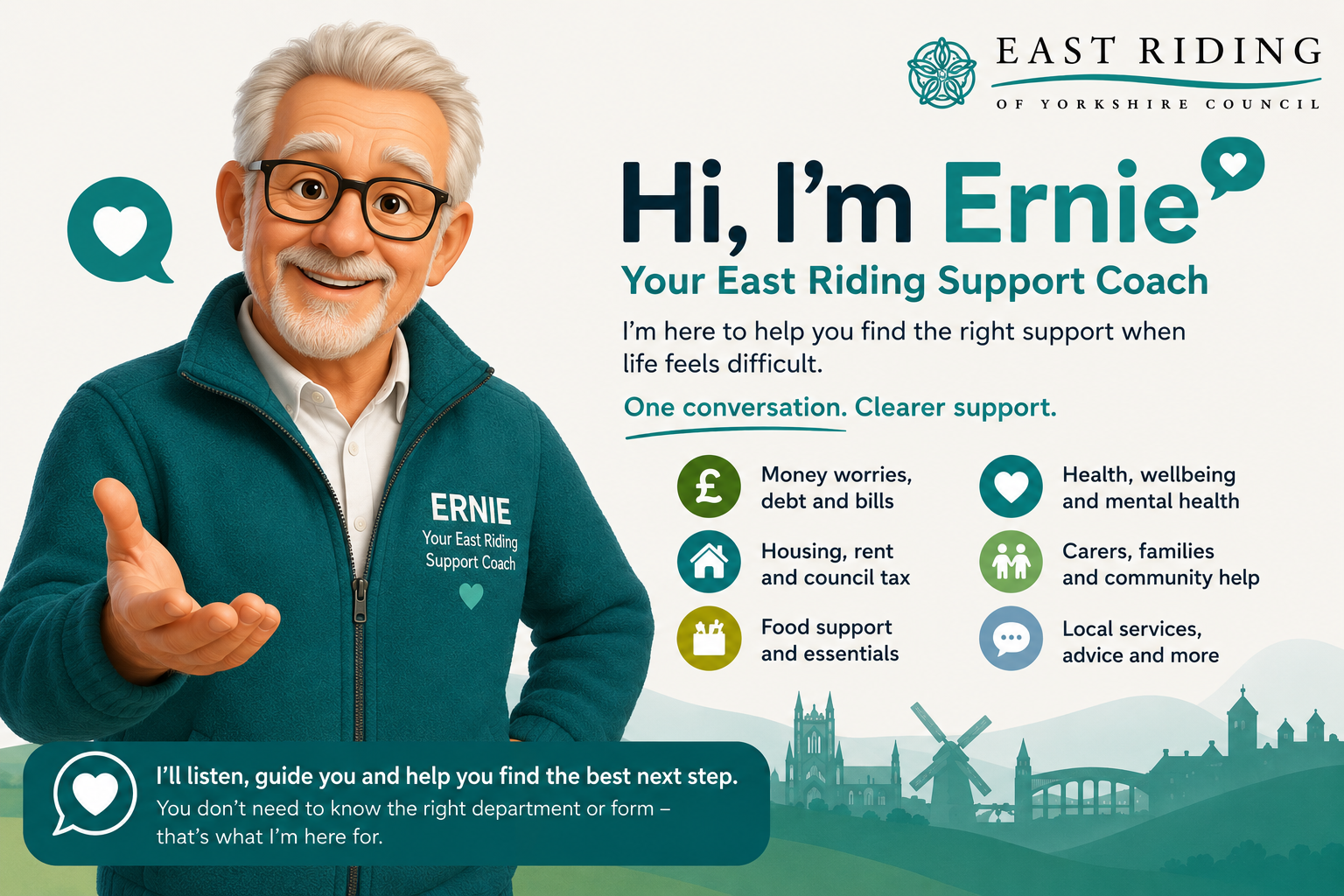
Ernie is here to help East Riding residents find the right support when life feels difficult. That could be money worries, bills, rent, food, housing, health, wellbeing, caring responsibilities or local services.
You do not need to know the right department, form or service before asking for help. Ernie helps you take it one step at a time and work out the best place to start.
Talk to Ernie
Use the voice coach below to get quick, practical guidance. You can ask about money worries, bills, rent, food, housing, wellbeing, caring responsibilities or local services.
Ernie is here to guide you to support and help you understand possible next steps. He does not replace emergency, safeguarding, medical, legal, financial or council decision-making advice.
What is in Ernie’s brain?
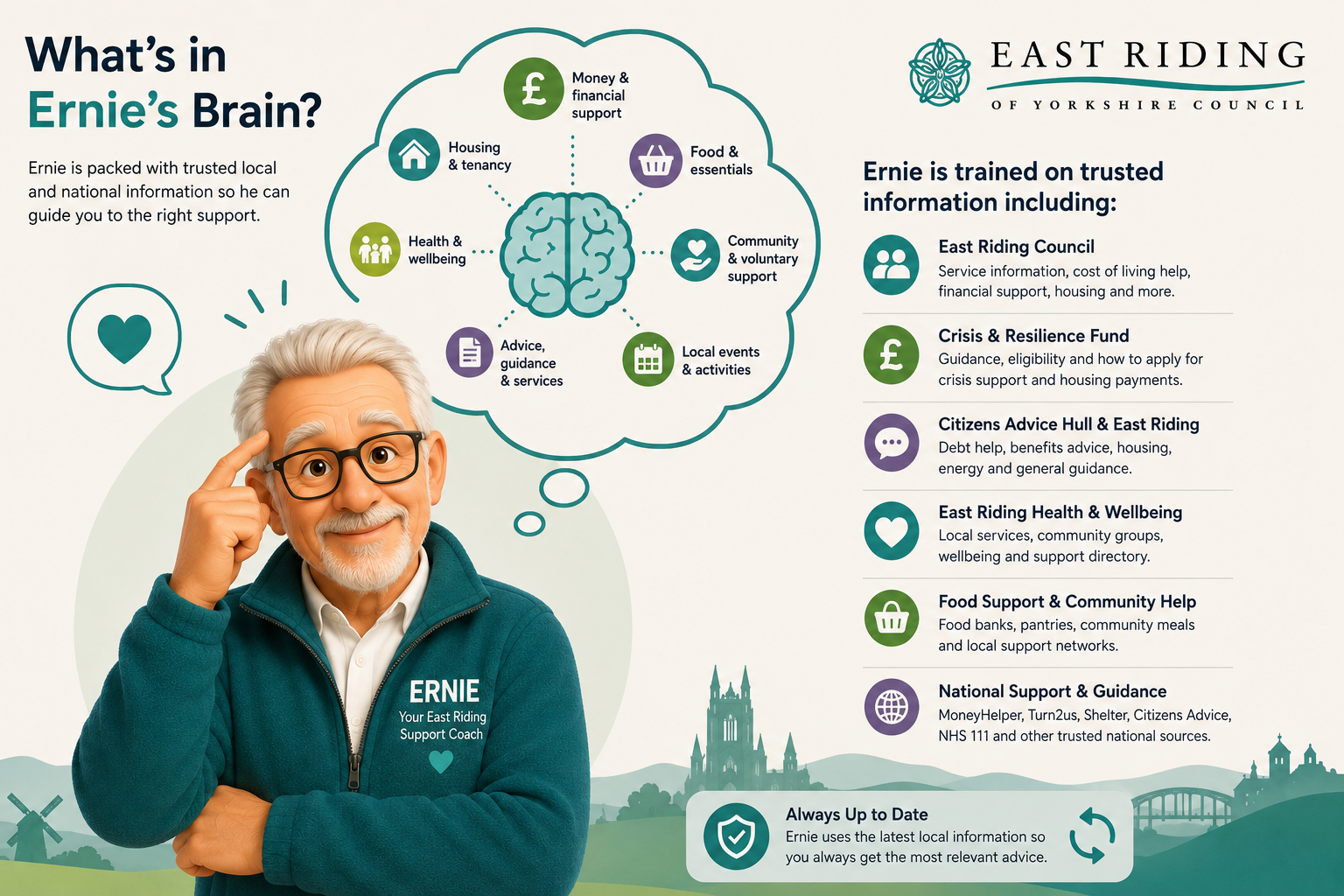
Ernie is trained on trusted local and national information, so he can guide residents towards relevant support without sending them round in circles.
This can include East Riding Council information, the Crisis and Resilience Fund, local wellbeing services, food and community support, Citizens Advice, and trusted national guidance.
Beyond a voice coach
Ernie shows how easy it can be for residents to ask for advice and find the right next step. But the wider opportunity is a full East Riding support app and web portal.
This could work like a local one-stop shop: residents answer a few simple questions, create a personal support plan, explore advice and services, and connect with the right help across money, housing, food, wellbeing, carers support, local events and community services.
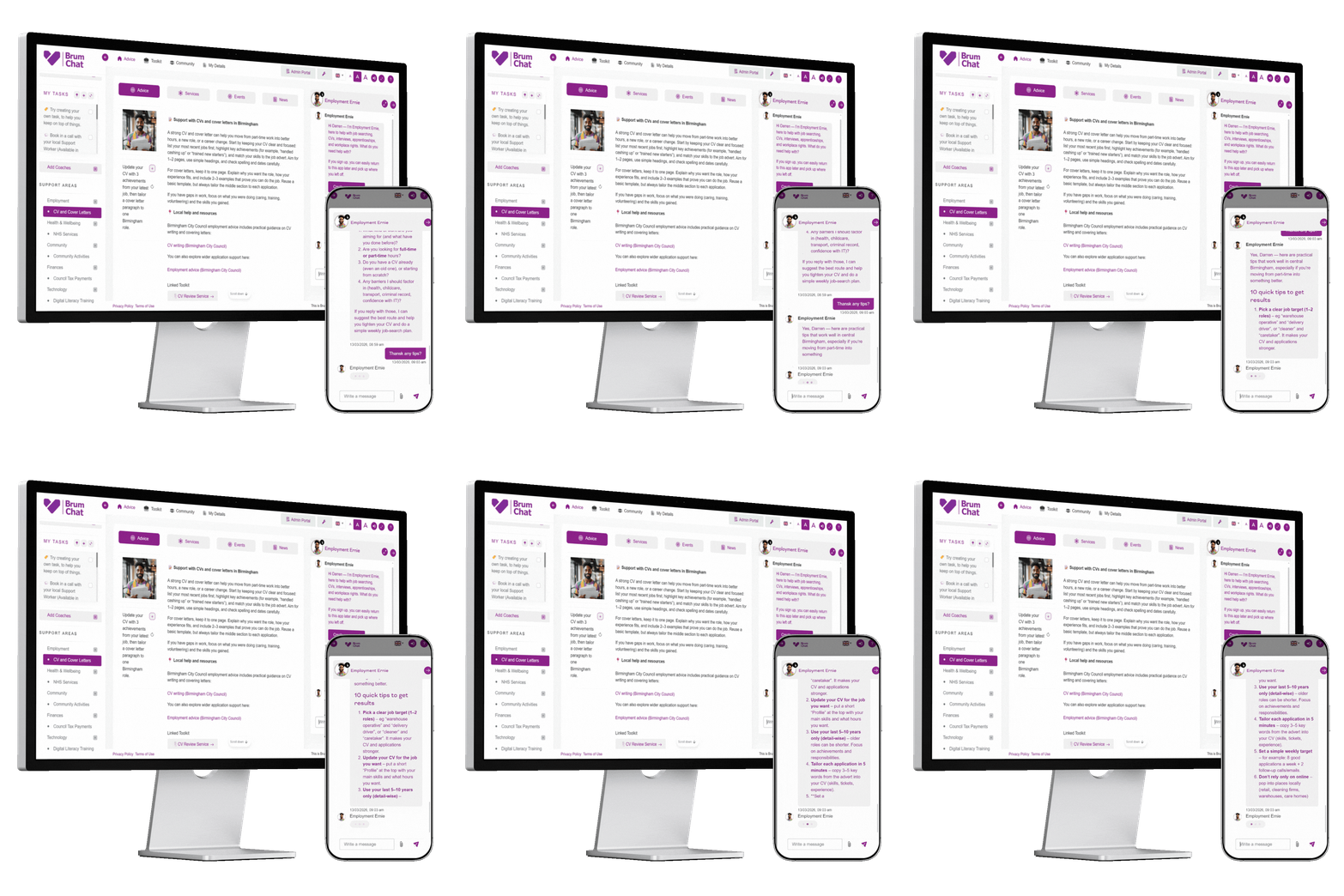
Example model: a wider app experience where residents can create a plan, explore support areas and return to their next steps.
How the wider platform could work
A voice coach is a simple front door. The wider app is where people can come back to their plan, save actions, discover services, access forms and find support in different areas of life.
A clearer front door for crisis, resilience and prevention
This demo shows how quickly residents can access guidance through a simple AI support coach. The wider opportunity is to create one joined-up route into support across the Crisis and Resilience Fund, money, housing, benefits, food, carers, independence at home and community help.
Professional explainer: how Ernie could support residents, teams and wider service pathways.
Ernie is not just a chatbot. He can become the front end of a wider local support model: gathering better information, guiding residents to the right support, helping complete forms, and giving council teams clearer information to review, progress and follow up.
What this could grow into
- Voice support to help residents complete Crisis and Resilience Fund applications.
- Guided form completion for areas such as PIP, emergency support, carers support or housing-related help.
- AI recommendations suggesting debt advice, food support, tenancy help or crisis payment review.
- Local service discovery across council teams, drop-ins, events and voluntary sector partners.
How teams could benefit
- Residents get a clearer route to support at the point they need it.
- Teams receive more structured information and less avoidable contact.
- Partners can be included as part of a wider no wrong door model.
- Decision-making can stay with council teams, or automation can be introduced where appropriate.
Final decisions can remain with council teams where needed. The role of Ernie is to make access easier, gather better information, reduce avoidable contact and help residents get to the right support faster.
How Ernie can help
Support is often spread across different teams, websites, forms, services and voluntary sector partners. Ernie helps create a clearer front door, so residents can explain what is happening and be guided towards the most relevant help.